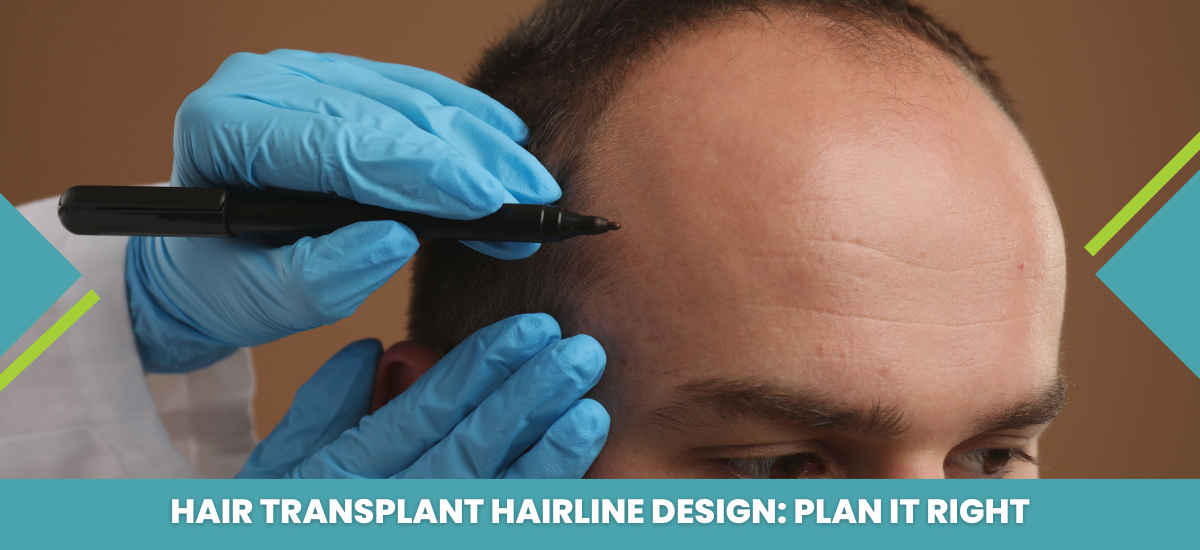
Hairline planning is the single most important step before a hair transplant because it decides how natural your results will look, both today and 20 years from now. Without it, even a technically well-done procedure can end up looking obvious or unnatural.
If you are considering a hair transplant in Jaipur, this is the one step you cannot afford to skip.
Most people spend weeks researching graft counts and techniques. Very few ask the more important question: where exactly will my new hairline sit, and will it still look right as I age?
At Rejuvena Cosmo Care in Jaipur, Dr. Deepesh Goyal, an experienced plastic surgeon in Jaipur, starts every hair transplant consultation with a detailed hairline planning session. In his words, getting this right upfront is what separates a result you love from one that needs correction.
Here is a complete breakdown of why hairline planning matters so much and what goes into doing it correctly.
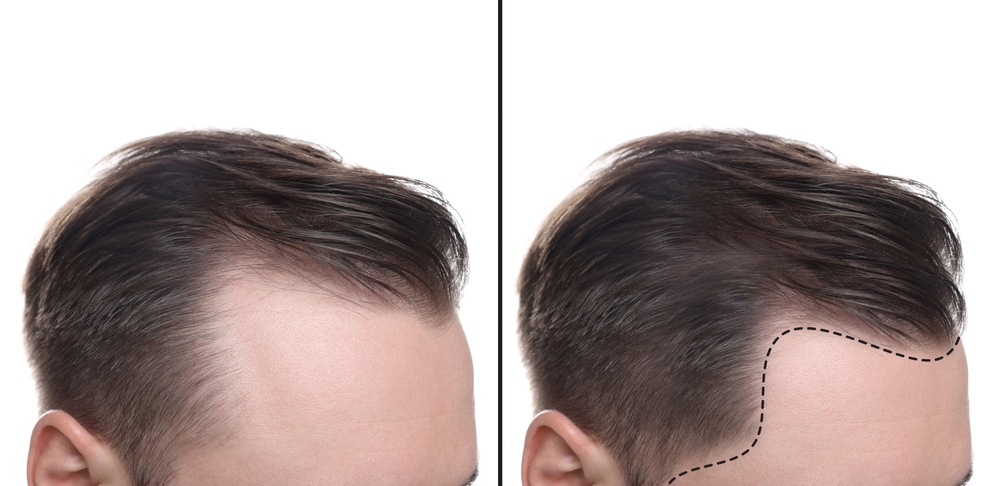
Check our before and after hair transplant photos of real patients.
What Is Hairline Planning in a Hair Transplant?
Hairline planning is the process of deciding where your new hairline will sit on your forehead, what shape it will take, and how many grafts will be used to create it.
It is not a quick sketch on paper. It is a detailed evaluation of:
- Your face shape and structure
- Your age and expected future hair loss
- The natural angle and direction of hair growth
- The number of healthy donor grafts available
- Your long-term hair goals
This planning happens before any grafts are extracted or placed. Getting it right at this stage saves a lot of trouble later.
Why Most People Underestimate This Step
Many patients come in focused on graft count or the technique used, like FUE or FUT. Very few ask about hairline design.
The truth is, a high graft count with a poorly drawn hairline still gives a bad result. On the other hand, a thoughtfully designed hairline with the right graft placement can look completely natural.
Think of it this way: the hairline is what people see first. It frames your face. It is the first thing that tells others whether a hair transplant looks real or not.
Dr. Deepesh Goyal, Plastic Surgeon at Rejuvena Cosmo Care, Jaipur, says: “I tell every patient that the hairline is not just about aesthetics today. It has to work for you 10 and 20 years from now. That long-term thinking is what separates a great result from one that needs correction.”
How Your Hairline Affects Your Facial Aesthetics
Your hairline does more than just cover your scalp. It defines the proportions of your face.
In classical facial anatomy, the face is divided into three equal parts:
- From the forehead hairline to the eyebrows
- From the eyebrows to the base of the nose
- From the base of the nose to the chin
When a hairline is placed too low, it throws off these proportions. When it is too high, it makes you look older than you are.
A well-planned hairline, one that respects your natural facial structure and age, brings balance back to your face.
Key Factors That Go Into Hair Transplant Hairline Design at Rejuvena Cosmo Care
At Rejuvena Cosmo Care in Jaipur, hairline design is a clinical process. Dr. Deepesh Goyal evaluates multiple factors before drawing a single line.
1. Your Age
A hairline that sits very low looks natural on a 22-year-old. But as you age, your facial skin changes. That same low hairline can look unnatural at 45.
Dr. Goyal designs hairlines that age gracefully with you. The goal is to look natural now and 20 years later.
2. Your Face Shape
Different face shapes require different hairline curves. A round face may need a slightly different shape than an oval or square face. A skilled surgeon studies your facial geometry before making any design decisions.
3. The Natural Pattern of Hair Loss
Male and female pattern baldness tends to follow predictable paths. Dr. Goyal considers where hair loss is currently occurring and where it is likely to progress. This ensures the transplanted hairline does not look isolated as surrounding hair continues to thin.
4. Donor Hair Availability
The back and sides of the scalp are the primary donor areas. The number of healthy follicles available limits what is achievable. A good surgeon works within these limits and plans accordingly, so you have enough grafts for future procedures if needed.
5. Insertion Angle and Direction
Hair does not just grow straight up. It grows at specific angles depending on the part of the scalp. Mimicking these natural angles during transplantation is what makes the result look real.
| Factor | Why It Matters |
| Age | Hairline must age naturally with you |
| Face Shape |
Determines ideal shape and position |
| Future Hair Loss |
Prevents isolated appearance over time |
| Donor availability |
Limits what can be achieved safely |
|
Hair Angle and Direction |
Ensures a natural, undetectable look |
|
Hairline Curvature |
Too rounded looks artificial; natural curves look real |
Hairline Planning for Men vs Women
Hairline design is not a one-size-fits-all approach. There are important differences between men and women.
Men
Male pattern baldness typically follows the Norwood scale, starting with a receding hairline and progressing backward. Men need a hairline that accounts for potential future recession. A more conservative, slightly higher hairline is often recommended for younger men, as it preserves donor grafts for later stages.
Women
Women tend to experience diffuse thinning across the crown rather than a receding hairline. For women, hairline refinement, especially along the temples, requires a softer, more curved design. Dr. Goyal offers specialised female hair transplant services at Rejuvena Cosmo Care.
Worried about what your hairline will look like after a hair transplant? Consult Dr. Deepesh Goyal in Jaipur.
The Role of the Donor Area in Hairline Planning
Most people think only about where the hair goes. But where the hair comes from is equally important.
The donor area on the back and sides of your scalp has a finite number of grafts. If a poorly planned hairline uses up too many grafts in one region, there may not be enough left to address thinning in other areas later.
Dr. Deepesh Goyal carefully maps the donor area before the procedure. This ensures grafts are distributed wisely across your entire treatment plan, not just for today’s hairline, but for future sessions if required.
Dr. Deepesh Goyal adds: “Donor hair is a limited resource. I always plan with the long game in mind. Patients who undergo hair transplant surgery in Jaipur at our clinic get a plan that works for the next 20 to 30 years, not just the next year.”
What to Expect During the Hairline Design Consultation at Rejuvena Cosmo Care
Before your hair transplant in Jaipur, Dr. Deepesh Goyal conducts a thorough pre-surgical consultation. Here is what this involves:
- A detailed scalp and donor area examination
- Assessment of your current stage of hair loss
- Discussion about your hair goals and lifestyle
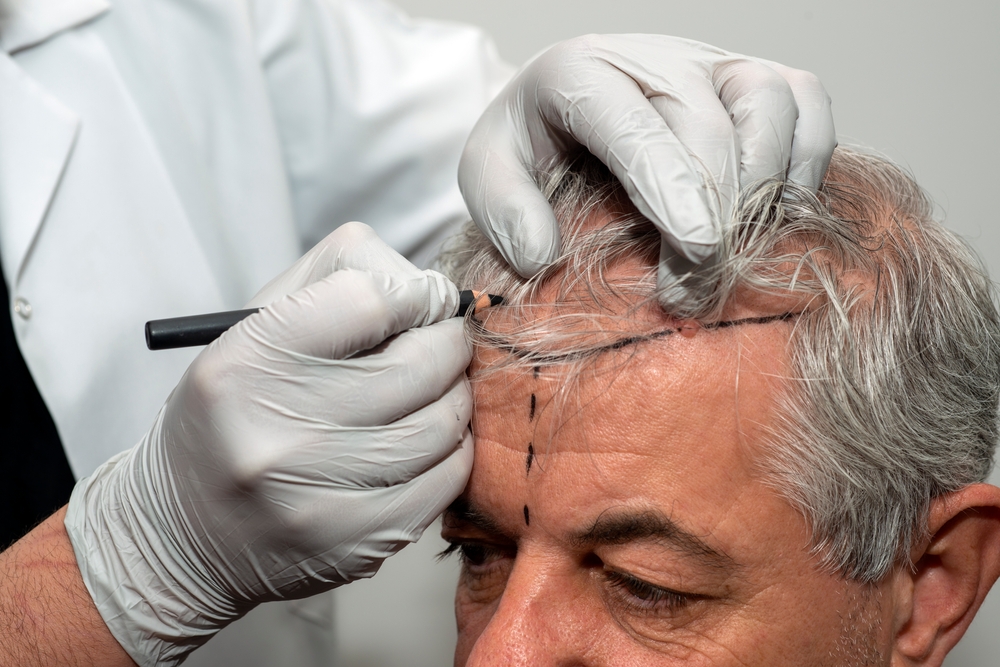
- Drawing of the proposed hairline on the scalp using a marker
- Digital photography to review the design before finalising
You actively participate in this process. The final hairline design is agreed upon together, and nothing moves forward until you are fully satisfied.
This step alone makes a significant difference in how your results turn out.
Why Choose Dr. Deepesh Goyal for Your Hair Transplant in Jaipur
Dr. Deepesh Goyal is an award-winning plastic and cosmetic surgeon and the founder of Rejuvena Cosmo Care, Jaipur’s first dedicated cosmetic surgery clinic. He holds an M.Ch. in Plastic Surgery and has performed thousands of hair transplant procedures across Jaipur and Rajasthan.
His approach to every hair transplant begins with a thorough hairline planning session. Patients travel from across India to Rejuvena Cosmo Care in Vaishali Nagar, Jaipur, for his expertise in natural-looking hair restoration.
Ready to begin your hair restoration journey the right way? Call Rejuvena Cosmo Care today and schedule your hairline planning consultation with Dr. Deepesh Goyal in Jaipur.
Frequently Asked Questions
What is the ideal age to plan a hairline for a hair transplant?
There is no fixed ideal age, but most surgeons recommend waiting until your hair loss pattern has stabilised. For most men, this is typically after 25 to 28 years of age. Dr. Deepesh Goyal evaluates each patient individually to determine the right time.
How is a natural hairline different from an artificial one?
A natural hairline has soft, irregular edges with micro-irregularities. It is not a perfectly straight or uniformly curved line. A surgeon who understands this places grafts in a way that mimics natural growth patterns, making the result virtually undetectable.
Can I choose my own hairline shape during the consultation?
Yes, to a significant extent. The surgeon draws a proposed hairline and discusses it with you. However, your surgeon will guide you on what is medically appropriate for your age, face shape, and donor supply.
Will my transplanted hairline look different as I age?
A well-planned hairline ages naturally with your face. Dr. Deepesh Goyal designs hairlines with long-term aesthetics in mind, so the result continues to look natural as the years pass.
What happens if I am unhappy with my hairline after the transplant?
Corrective procedures are possible but complex and expensive. This is why getting the hairline right before the surgery is so important. At Rejuvena Cosmo Care, the pre-surgical planning process is thorough to ensure patient satisfaction from the start.
References
- International Society of Hair Restoration Surgery (ISHRS) – Hair Transplant Guidelines: https://www.ishrs-dprs.org
- American Academy of Dermatology – Hair Loss Overview: https://www.aad.org/public/diseases/hair-loss
- National Library of Medicine – Follicular Unit Extraction and Hairline Design: https://pubmed.ncbi.nlm.nih.gov
Disclaimer: The information shared in this content is for educational purposes only and not for promotional use.